
Airline Guides · October 22, 2026 · IDoLetsGo
20 Long-Haul Flight Tips That Actually Work
Make a 10-hour flight more comfortable with practical long-haul flight tips for sleeping, managing jet lag, packing snacks, and arriving ready for your honeymoon.
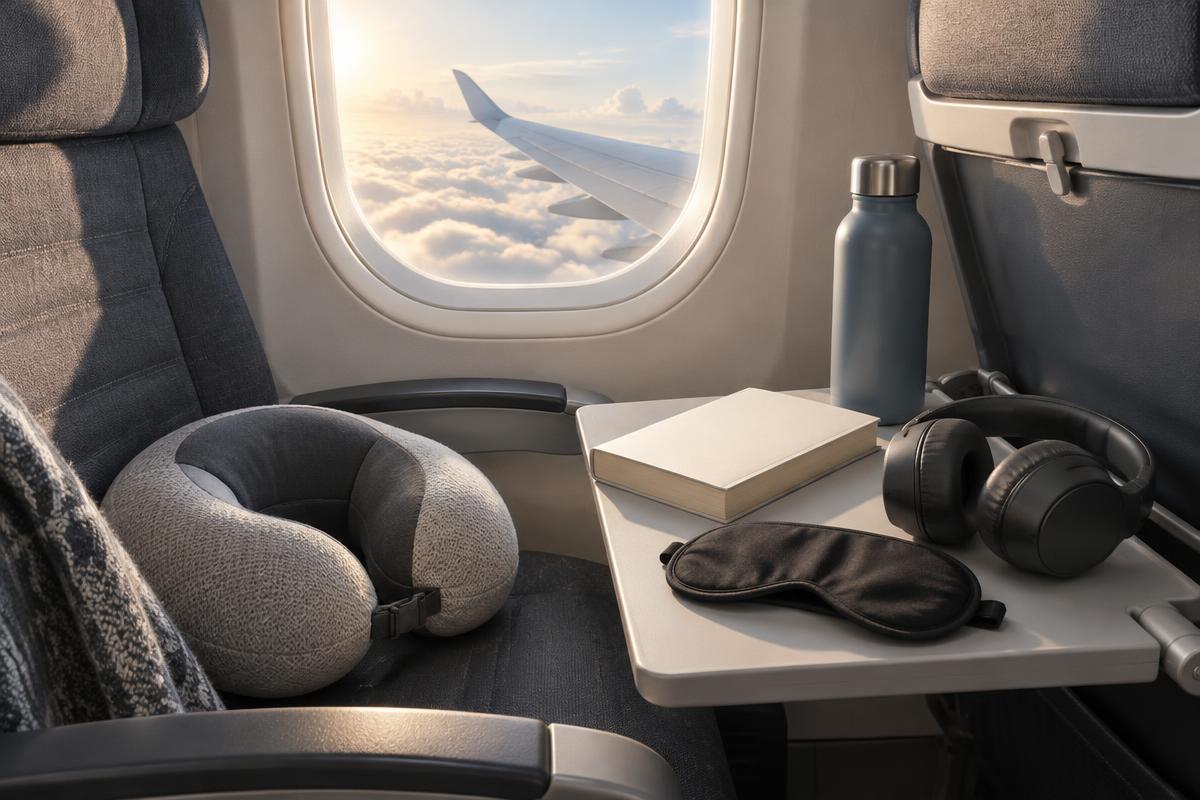
A long flight can be the least romantic part of a honeymoon. You have finally finished planning the wedding, packed your bags, and booked the trip—only to face ten or more hours in an economy seat. You cannot make the cabin bigger, but you can make the journey more comfortable.
These 20 long-haul flight tips focus on what you can control: your sleep setup, your carry-on, your meal timing, and your first day after landing. Use them as a checklist for your next overnight flight, whether you are heading to Europe, the Caribbean, or somewhere much farther away.
Sleep better on a long-haul flight
1. Consider properly fitted compression socks. Long stretches of sitting can leave your ankles swollen. Compression socks may help, but they are not right for everyone. If you have circulation problems or a history of blood clots, ask your clinician what precautions are appropriate before flying. Socks are not a substitute for moving.
2. Choose a neck pillow that supports your chin. If your head keeps dropping forward, the familiar U-shaped pillow may not be doing enough. Try a supportive pillow at home before packing it, and choose one that feels comfortable without restricting your neck.
3. Combine earplugs with noise-canceling headphones. Comfortable earplugs can reduce chatter while headphones soften the steady cabin hum. Keep the volume low, and remove them when you need to hear crew instructions. Pack a charging cable or spare batteries if your headphones need them.
4. Bring a miniature bedtime routine. Brush your teeth, freshen up, and put on your eye mask before settling down. Keeping a few familiar bedtime habits can make the transition to rest easier. Put those essentials in a small pouch you can reach without opening your whole carry-on.
5. Prioritize sleep when the timing makes sense. On an overnight flight that lines up with nighttime at your destination, consider eating before boarding rather than staying awake for the first meal service. Use the bathroom when safe to do so, then settle in instead of waiting through every cabin activity.
6. Protect the rest you can get. Use an eye mask and keep your seat belt visible over your blanket so the crew can check it. You can ask whether it is possible to skip a meal service, but do not count on a completely uninterrupted night. A few hours of rest is still worthwhile.
7. Do not experiment with sleep medication in the air. Ask your clinician whether a sleep aid is suitable for you and follow their directions. Never combine it with alcohol or take someone else's prescription. Sedating medication can reduce your ability to move around or respond to an emergency; trying it at home does not automatically make it safe for flying.
Make jet lag easier to manage
8. Set your watch to destination time. Once you board, start thinking in the time zone you are traveling to. Use it to plan your rest and meals where practical. You do not need to force yourself awake for an entire flight just to follow the clock perfectly.
9. Shift your schedule gradually before departure. If your routine allows, move bedtime and wake-up time a little closer to your destination's schedule over several days. Small changes are more manageable than suddenly moving your sleep by several hours, especially during the busy final stretch before a wedding.
10. Keep your arrival day gentle. After a morning arrival, get some daylight and aim for a reasonable local bedtime. If you need a nap, keep it short and avoid a long late-afternoon sleep. Skip a packed sightseeing itinerary, and do not drive if you are dangerously tired.
11. Drink water regularly—not excessively. Bring an empty refillable bottle through security and fill it afterward. Cabin air can feel dry, so sip water throughout the flight. Hydration helps comfort, but it does not cure jet lag, and electrolyte packets are not essential for most travelers. Follow any medical fluid restrictions you have.
12. Skip alcohol when sleep is the priority. A drink may make you feel sleepy at first, but it can disrupt sleep later. If arriving rested matters more than a celebratory onboard drink, save the toast for your destination.
Keep your body comfortable
13. Pack a warm, comfortable layer. Cabin temperatures vary. A hoodie, shawl, or lightweight blanket gives you an option beyond whatever the airline provides. Wear loose layers so you can adjust without digging through your luggage.
14. Move regularly when it is safe. Take short walks when the seat-belt sign is off and the aisle is clear. While seated, flex your ankles and move your legs periodically. Follow crew instructions, and do not wait until you feel stiff to start moving.
15. Keep fresh clothes in your carry-on. A clean shirt, underwear, and socks can make a long connection feel less draining. Change before boarding or during a layover when convenient. A spare outfit is also useful if your checked bag arrives later than you do.
16. Compare the actual premium economy seat before upgrading. On a very long flight, more space may be worth paying for. Check the airline's seat details: extra-legroom economy and a separate premium economy cabin are not the same thing. Width, recline, leg rests, and upgrade prices vary by aircraft and airline.
Eat on your own schedule
17. Bring snacks you actually enjoy. Pack simple, nonperishable food so you are not completely dependent on the meal cart. Check airport security rules for liquids and spreads, and destination rules for food imports. Fresh fruit, meat, and dairy may need to be declared or discarded before entering another country.
Make the hours pass without staring at one screen
18. Download entertainment before leaving home. Save shows, podcasts, music, and audiobooks while you have reliable Wi-Fi. Check that downloads play offline. Bring your charging cable and an airline-permitted power bank in your carry-on rather than assuming your seat will have working power.
19. Pack an option that does not need a screen. A paperback, puzzle book, or small notebook gives your eyes a break. For a honeymoon, you could jot down places you both want to visit or a few memories from the wedding—without turning the flight into another planning session.
20. Rotate activities and save one low-pressure task. Switch between reading, listening, watching, and resting instead of trying to fill ten hours with movies. Sorting offline photos or organizing notes can use up a quiet stretch. Avoid sensitive financial work on shared networks, and give yourself permission to do nothing.
A more comfortable flight starts before booking
For your honeymoon, compare the full journey—not just the cheapest fare. A reasonable connection, a seat that suits you, and time to recover on arrival can matter more than saving a small amount on an exhausting itinerary. Points can help reduce eligible flight and hotel costs, but taxes, fees, availability, and card terms still matter.
If you are still building your travel plan, take the IDoLetsGo Find My Card quiz to explore cards that fit your wedding spending and travel goals. You can also compare current travel card listings and browse our Travel Savings resources before you book.
The goal is not a perfect flight. It is arriving with enough energy to enjoy the trip you have been looking forward to.
Ready to find your card?
Answer a few questions and we'll match you with the cards that fit your plans.
GET YOUR RECOMMENDATION